For an energy source that’s so consistent and measured in its 93-million-mile trek to Earth’s atmosphere, solar power rides a roller coaster of heady promise and stark reality as it’s factored into the market for electrical energy.
From a technical standpoint, snatching energy from the sun has never been easier. Technologies for accessing, converting, and distributing solar energy — chiefly via photovoltaic (PV) panels — are proven and established. Meanwhile, progress on the next game-changing technical front to refine methods of capturing and storing it in batteries is picking up steam.
It’s in the mechanics of integrating itself into the existing electrical energy framework where solar is still searching for its footing. Competing against wind and other renewables, as well as established fossil fuels, on a playing field that’s buckling under forces that swing between tilting and levelizing it, solar seems to be running in place. On one level, it’s raring to go; on another, it’s stymied by seemingly intractable market realities.
After a flurry of activity, some publicly funded financial incentives that helped solar take off around 2005 are ebbing. That’s left it more exposed to the mercy of fundamental energy market forces that are proving stubbornly resistant to renewables. But at the same time, prices and supplies of fossil fuels — notably natural gas — are gyrating. The result amounts to more questions than answers about long-term prospects for traditional energy sources and, by extension, renewables like solar.
Big picture entices investors
The bigger financial picture for solar is anything but bleak, however, especially in light of the emergence of creative funding concepts. Taking a long view of the energy market through an environmental prism, solar industry players can’t help but see a bright future. But for as far as the eye can see, solar’s economic viability will be a central concern — one that financiers, developers, installers, and power producers are working hard to address.
Convinced that its core attributes as a clean and abundant source of power make it a can’t-miss technical proposition, the solar delivery industry is shifting more of its attention to rationalizing solar as a sound investment. Exploring everything from new twists on leases, third-party ownership, and power purchase agreements on the consumer side to vehicles such as project bonds, asset securitization, and master limited partnership arrangements on the developer side, solar proponents are turning over every stone for answers (see SIDEBAR: Funding Options).
While it is indeed more challenging to make solar projects work financially, investor interest in projects remains fundamentally strong, contends Mark Crowdis, president of Reznick Think Energy, LLC, a renewable energy consultancy with headquarters in Bethesda, Md. Yes, expirations and retrenchments of incentives put solar on shakier investment ground. It was easier to develop investor-grade projects before expiration of the Treasury Department’s 1603 grant program, which doled out 30% of a project’s cost in direct cash, and the Energy Department’s 1705 loan guarantee program for riskier utility-scale projects. Many investors were more enthusiastic about solar projects and willing to take more risks before the near-collapse of the New Jersey solar renewable energy credit (SREC) market. Add in plummeting natural gas prices and entrenched fossil fuel subsidies, and the picture worsens.
But this situation is being partially offset, he notes, by falling prices on PV components. Plus, requirements that utilities boost the renewables component of their energy mix — in some cases with specific solar “carve outs” — and efforts to broaden their corporate investment portfolios to include funding of distributed solar project investments act as counterweights to the incentive reductions and decreased electricity prices.
“There’s capital in this market,” says Crowdis. “Investors used to lack an understanding of how solar technologies and systems worked. Now investors are much savvier. There’s more understanding of solar — enough so that more investors are now willing to provide capital for projects. Banks, pension funds, and even individuals want to invest in renewable energy in North America. It’s seen as an attractive, stable, and potentially high-return investment.”
Topping out or taking a break?
Between 2004 and 2011, it seems, investors increasingly bought that argument. During that time, according to a May 2012 white paper published by Bloomberg New Energy Finance, “Re-Imagining U.S. Solar Financing,” asset financing of U.S. solar PV projects grew 58%. Such funding peaked in 2011, Bloomberg says, spurred partly by looming year-end incentives expirations, when $21.1 billion was secured to help build out some 1.8 GW of new solar PV capacity.
Looking ahead, the white paper projects that U.S. PV deployment will demand an average of $6.9 billion per year through 2020. Between 2012 and 2020, residential and commercial capacity alone — not counting utility-scale installations — will grow at a compounded annual rate of 22%, resulting in almost 16 GW of cumulative capacity at the close of that period.
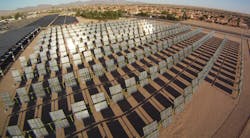
Meanwhile, utility-installed PV continued to grow at a faster clip into 2012. In the year’s second quarter alone, utility PV installs numbered more than 20 for a combined 447MW, according to a report from GTM Research and the Solar Energy Industries Association. According to this report, it was the busiest quarter ever for utility-scale PV.
Overall, PV installs of 742MW were up 116% in the quarter over the same period in 2011, the report said. The residential market experienced little growth in the quarter, while the commercial market contracted 33% quarter-over-quarter. Still, the residential and commercial markets could be the near-term growth engines for PV. If utilities are reluctant to disrupt the profitable status quo with big capital outlays on solar, more electric customers are increasingly eager to get out ahead of the steepening energy cost curve. PV systems either purchased outright or leased — while still generally requiring a substantial investment that’s lashed to an extended payback period — offer an opportunity to lay a foundation for lower net energy costs down the road.
That’s leading more companies, among them specialized electrical contractors, to get into the business of formulating, designing, and installing PV solutions for this market — a market that’s likely to grow as solar capital equipment and installation costs come down amidst a growing supply glut and a consolidating industry.
Shift to utility projects
Eying solar and other alternative energy sources from a short-term hedging and long-term positioning perspective, utilities and independent power producers certainly have begun to integrate more solar into their generation mix. However, there’s little evidence they’re in any particular hurry to allocate large slugs of capital and capacity to new technologies. With systems built for abundant coal — and now, more recently, cheap natural gas — power producers still have little incentive to embark on wholesale replacements of fully depreciated generation and transmission assets that can deliver power efficiently, if not at a price far from certain to remain stable.
That utility market, however, has been where the action is for some companies that have sought to stake out positions on the leading edge of the solar installation market. Having plunged into the commercial market in the busy early-adopter phase, some solar systems contractors have been shifting their attention to utility market niches that offer more immediate potential.
In the quest for more opportunities to keep its hand in the evolving solar space, Rosendin Electric has delved deeper into markets where solar’s economic advantage is stark. Having installed large renewable distributed energy generation (RDEG) PV projects in municipalities and school districts in California, as well as utility-grade solar farm projects, the San Jose, Calif., electrical contractor turned its attention to utility projects in markets where sunlight factors and exceedingly high incumbent energy costs make a near slam-dunk case for PV.
Rosendin Electric is in the midst of building a 75MW PV solar farm project for the state-owned utility in Puerto Rico. Because end-user energy costs are 25 to 32 cents per kWh and rising, this arrangement is an ideal candidate for an alternative energy approach. Seeing a window of opportunity to address high energy costs and an aging fuel oil-based electric supply, the island’s governor pushed through renewable portfolio standards for the utility, paving the way for this and many other PV projects, says Duncan Frederick, the company’s director of solar operations.
“Beyond these utility-scale opportunities, there’s a high concentration of industrial and commercial users in Puerto Rico, especially in the pharmaceutical sector there, who are paying a lot for power, creating a demand for local RDEG renewable power solutions,” he says. “We’re [solar contractors] all chasing markets like this that have a fundamental higher cost of power, because without that it’s tough to make these projects work. Larger EPC players like us saw a great ride with local incentivized RDEG projects, but we needed to switch gears to focus on new markets as state and local incentives have dried up.”
Signs of life in commercial
In a clear demonstration of the PV market’s protractedly unsettled nature, Frederick is now looking for new signs of life in the commercial RDEG space. With the utility sector generally looking tougher to crack because of low natural gas prices, that market may present new opportunities for the company to partner with developers and independent power producers on commercial PV projects wherein financial returns for equity investment are becoming competitive, he says.
“We’re in a holding pattern to see how that shakes out — the idea being that we want to have a good presence in both markets, knowing that each one will have its ups and downs,” he says.
The commercial PV market could be poised for growth if only because the prospect of uncertain and likely rising energy costs is so menacing. For especially large commercial users positioned to leverage economies of scale, PV installations can represent an investment in a key component of competitiveness. Combine that with the ability to possibly offset costs with incentives for the use of alternative energy and the ability to use power purchase agreements (PPAs) to sell power produced on-site back into the grid, and big commercial energy users may begin to see the advantages.
“If you’re a large business like a Wal-mart-type operation that has a lot of buildings that allows you to do an aggregated bid on a system, the numbers can be made to work,” Crowdis says. “But I think it’s still going to be harder to make the financial case without any incentives in place, with the exception of spots where electric rates are very high.”
The bar for financial feasibility in the non-residential market may not be as high, though, if creative funding schemes and payback scenarios can be brought into play. Third-party finance, for instance, can bring in outside entities to build, operate, maintain, and attempt to turn a profit from a PV system. The commercial entity, in turn, gets to tap into some of the power generated, presumably at competitive rates. The owner, meanwhile, juices its return via tax-equity financing that takes advantage of investment tax credits for funding renewable energy projects.
Cupertino Electric, Inc., a San Jose electrical contractor, is hopeful that creative financing and other forms of outside investment will help fuel an uptick over time in commercial PV in California. Saurabh Samdani, who oversees forecasting and modeling for the company, sees commercial PV prospects still being uncomfortable with the idea of outright system ownership.
“We can tell everyone that solar systems are easy to operate and maintain, but many companies don’t have the processes or people in place to do it,” Samdani says. “They may not be interested in taking the risk of owning and operating a system. The common perception is that these activities are best left to the entities who understand this risk. Therefore, these companies are more comfortable with a third-party owning and maintaining the system.”
Still, from a financial resources standpoint, many companies willing to consider aggressive steps to get a handle on their own energy costs may be better positioned than ever, says John Curcio, who started Cupertino’s renewables division in 2007 and now serves as its chief commercial officer.
“There’s a tremendous amount of cash on company balance sheets today, so the resources might be there to directly fund a PV system,” he says.
Factoring solar into the grid
Growth in the commercial and residential PV market could also come courtesy of evolving regulations governing how solar energy system owners can offset the costs of power obtained from the grid. Curcio noted recent progress in California on advantageous changes to net metering that would allow commercial PV users to consolidate meters from multiple properties for the purpose of calculating net energy cost savings on utility-furnished power.
Net metering and other techniques that can effectively lower electric consumption and costs will be an important driver of PV’s growth in the residential market. With systems still costly enough to generally preclude outright ownership, homeowners will need more certainty that their power costs come in low enough to pay for leases, system maintenance, and, when applicable, financing costs.
Now averaging about $4 per watt installed, about 40% of which covers equipment, according to the Solar Electric Power Association (SEPA), PV systems remain significant investments demanding assurances of reduced power costs. Those costs have come down from more than $8 just five years ago, says Eran Mahrer, SEPA’s vice president of utility strategy, but they still present a high enough bar to give homeowners pause. The keys to expanding residential PV will be further declines in costs, especially those tied to installation, mixed with programs that can help monetize solar’s inherent efficiencies as an energy source.
“Utility incentives through programs like the California Solar Initiative that provide cash rebates are one of the most important drivers of residential solar,” Mahrer says. “But most incentives like this were designed to ratchet down on some predictable path, and that’s been happening. What’s left in addition to the Federal Investment Tax Credit is another mechanism for driving solar, which is net metering, and being able to export energy produced to the utility and getting a retail credit.”
Gauging residential prospects
Until costs come down further, it’s likely that homeowners interested in installing PV will look to third-party ownership arrangements such as PPAs or leases where ownership can be secured after the lease period ends. Companies specializing in structuring and delivering such deals have been proliferating, but a shakeout may be underway, given the persistent challenges of stable or declining costs of traditional sources of electricity and not enough business to go around. But PV module manufacturers, pressured by declining equipment costs, could begin to move into the system development space in a bid to weather the reduced-return environment.
However the acquisition is structured, homeowners who fit the optimal PV user profile can probably secure a guarantee of cheaper power over time, Mahrer says. “On a household’s cash flow basis, payments on a PV system versus present utility power, a customer can benefit from a fixed cost of energy and hedge themselves against future price changes — at least under today’s net metering arrangements.”
That, of course, may be the biggest wild card in trying to forecast whether PV and other renewables will grow to become more than fringe sources of power. If traditional sources of power become easier and cheaper to access and use in a cleaner fashion — and they remain heavily subsidized to boot — solar and other alternatives will surely struggle to gain a foothold. Combine that with declining economic incentives, notably the scheduled reduction in the federal investment tax credit for solar from 30% to 10% in 2016, and the hill becomes even steeper.
Yet creative and aggressive financing coming from a bigger pool of investors eager to grab a piece of the new frontier in arguably the world’s most important economic sector — energy — could well keep solar and other renewables in the game. Ditto for the companies deploying the technology, including electrical contractors and engineers engaged in everything from securing financing to designing and installing systems to performing operations and maintenance.
“The prospects for solar energy and for us in that space look good,” Rosendin Electric’s Frederick says. “If there’s a shakeout in the industry, the players remaining are those that have a strong financial foundation and are diversified enough to be a player in the residential, commercial, and utility-grade sectors.”
Zind is a freelance writer based in Lee’s Summit, Mo. He can be reached at [email protected].
SIDEBAR: Funding Options
As much work as went into refining solar PV technology, there’s been no shortage of effort into finding ways to make it financially practical to install. Financing solar PV has almost become an industry unto itself, as all parties look for creative ways to factor up-front costs, payback periods, prevailing electric rates, subsidies, and a host of other variables into a favorable equation.
While every financing deal can come with its own unique structure and nuances, most come down to a choice between system ownership of some sort or reaping the cost benefits of solar-produced electricity.
Outright ownership: Residential or commercial power users with deep pockets or willing lenders can buy a system, reaping both the potential benefits of lower cost power and the intrinsic value of a PV system. Tax credits, net metering, and depreciation can effectively lower the costs of ownership over the system’s life and potentially raise a property’s value, but system maintenance and financing costs are offsets. Users without the ability to pay cash for a system can access a variety of lending schemes, including bank and subsidized loans, as well as those secured by the solar equipment or property, or unsecured commercial or guaranty loans like those through the Small Business Administration.
Leasing: Significant up-front costs can be eliminated under leases where a third party owns the system. The user makes lease payments on the hardware, but those costs are offset by cheaper power. Under a typical lease, the user can extend the lease at term’s end or purchase the system for residual value.
Power Purchase Agreements (PPA): Users simply interested in cleaner, cheaper power can purchase the solar power generated from a hosted system. Installation, ownership, and maintenance is handled by a third party, which contracts to offer the user power at a set rate for a period of time. Power cost savings are typically reduced in this scenario, but up-front costs are eliminated.
About the Author
Tom Zind
Freelance Writer
Zind is a freelance writer based in Lee’s Summit, Mo. He can be reached at [email protected].